
As large language models continue to power chatbots, search assistants, copilots, and enterprise automation systems, evaluating their quality has become mission critical. Businesses can no longer rely on anecdotal feedback or surface-level benchmarks to determine whether a model is safe, accurate, and aligned with user intent. Instead, structured evaluation platforms are emerging to help teams systematically test performance, reliability, and risk signals across diverse datasets and use cases.
TLDR: LLM evaluation platforms help teams measure the accuracy, safety, consistency, and performance of AI models at scale. Tools like DeepEval provide structured testing, benchmarking, and monitoring capabilities across real-world scenarios. Several alternative platforms offer similar strengths, including automated testing pipelines, human feedback loops, observability dashboards, and red teaming features. Choosing the right platform depends on workflow integration, testing depth, and deployment scale.
Why LLM Evaluation Platforms Matter
Traditional machine learning evaluation relied heavily on static benchmarks and predefined datasets. With generative AI models, however, outputs are dynamic, context-sensitive, and often subjective. This introduces several challenges:
- Non-deterministic responses across repeated prompts
- Hallucinations and factually incorrect outputs
- Toxicity or bias risks
- Prompt sensitivity and edge case instability
- Difficulty measuring subjective quality
Modern LLM evaluation platforms address these challenges by combining automated metrics, prompt test suites, human feedback systems, and real-time monitoring tools into one unified workflow.

Below are six platforms similar to DeepEval that teams can use to benchmark, audit, and improve AI model performance.
1. LangSmith
Best for workflow tracing and experiment management
LangSmith provides a structured environment for debugging, tracing, and evaluating LLM applications. It is particularly useful for teams building complex orchestrated pipelines using chains, tools, and memory components.
Key Features:
- Detailed execution tracing for prompts and chains
- Dataset-driven evaluation workflows
- Custom evaluation metrics
- Side-by-side response comparison
- Human annotation support
LangSmith excels at identifying where model outputs break within longer workflows. For instance, if a retrieval augmented generation system produces hallucinated summaries, engineers can trace whether the issue originates in retrieval, prompting, or generation.
This platform is particularly beneficial for research teams iterating rapidly and refining prompts across multiple versions.
2. TruLens
Best for feedback-driven evaluation loops
TruLens focuses on feedback-based LLM evaluation using structured signals. It allows teams to define evaluation criteria across dimensions such as groundedness, relevance, and safety.
Key Features:
- Groundedness measurement against retrieved sources
- Automated feedback scoring
- Customizable evaluation pipelines
- Integration with existing LLM frameworks
TruLens is particularly strong in scenarios involving retrieval augmented generation where ensuring factual consistency is critical. By comparing generated outputs directly against retrieved knowledge, it reduces hallucination risk and strengthens trust in model responses.

3. Promptfoo
Best for lightweight prompt benchmarking
Promptfoo is a straightforward, developer-friendly evaluation tool designed to compare prompt variants and model outputs quickly. It is especially helpful during rapid experimentation phases.
Key Features:
- Prompt testing via configuration files
- Multi-model comparisons
- Assertion-based output validation
- Simple CI integration
This platform enables teams to treat prompt evaluation similarly to traditional software testing. For example, developers can assert whether certain keywords appear in responses, whether output length meets criteria, or whether semantic similarity crosses defined thresholds.
While lighter than enterprise-level monitoring platforms, Promptfoo is effective for structured A/B testing across prompts and models.
4. Humanloop
Best for human-in-the-loop quality control
Humanloop blends automated evaluation with structured human feedback workflows. It is well suited for enterprises that require detailed oversight and regulatory awareness in AI outputs.
Key Features:
- Human review dashboards
- Prompt version control
- Feedback annotation management
- Performance analytics
Human-in-the-loop evaluation is especially important in industries such as healthcare, finance, and legal services, where small inaccuracies may carry regulatory consequences. Humanloop’s framework allows reviewers to audit and score outputs systematically, creating traceable documentation for audit trails.
This hybrid approach combines subjective human assessment with quantitative scoring for more balanced evaluation strategies.
5. Arize AI
Best for production monitoring and observability
Arize AI extends beyond pre-deployment benchmarking and into live monitoring of LLM systems. It focuses heavily on observability, providing analytics on drift, latency, and performance trends over time.
Key Features:
- Real-time model monitoring
- Drift detection
- Embedding visualization
- Production performance dashboards
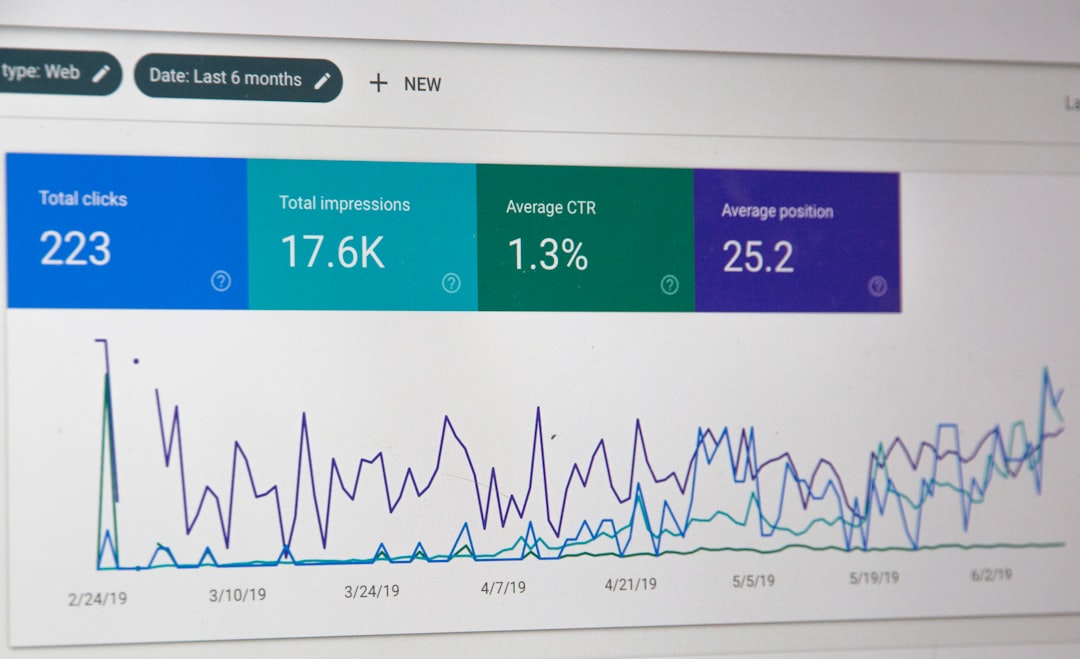
Unlike experimental testing tools, Arize emphasizes long-term stability. As user interaction evolves, prompts may shift, user vocabulary may change, and retrieval databases may expand. Monitoring these patterns ensures the model continues to perform reliably under real-world pressure.
For organizations deploying models at scale, observability is essential to prevent silent degradation.
6. Ragas
Best for automated RAG evaluation
Ragas specializes in evaluating retrieval augmented generation systems using automated metrics. It provides structured scoring for faithfulness, answer relevance, and context precision.
Key Features:
- Automated RAG scoring metrics
- Answer faithfulness evaluation
- Context relevance scoring
- Framework compatibility
Ragas is ideal for developers building knowledge-based assistants that rely on external document retrieval. By automating evaluation of how well responses align with source material, it reduces manual testing overhead and improves reliability.
Core Evaluation Capabilities to Look For
While each platform has unique strengths, effective LLM evaluation systems often share the following characteristics:
1. Multi-Dimensional Metrics
- Accuracy and factual grounding
- Coherence and readability
- Safety and toxicity screening
- Bias detection
2. Custom Test Datasets
- Industry-specific queries
- Edge-case scenarios
- Regression testing prompts
3. Automation & Continuous Integration
- API-based workflows
- CI pipeline integration
- Repeatable testing configurations
4. Human Feedback Mechanisms
- Annotation tools
- Side-by-side model comparisons
- Scoring consistency tracking
An ideal evaluation stack often combines automated scoring tools with guided human review and production monitoring.
How to Choose the Right Platform
Selecting the right evaluation solution depends largely on organizational needs:
- Early-stage startups may prioritize lightweight prompt testing tools.
- Research labs may prefer deep experiment tracking and metric customization.
- Enterprise teams often need observability, audit trails, and human review workflows.
- RAG-heavy systems benefit from groundedness and context scoring tools.
Budget, technical complexity, integration support, and team size all influence the final decision. Companies often combine multiple evaluation layers to create a comprehensive testing ecosystem.
The Future of LLM Evaluation
As AI systems become more autonomous and integrated into mission-critical processes, evaluation platforms are evolving rapidly. Emerging trends include:
- AI-driven automated grading agents
- Continuous red teaming simulations
- Adaptive benchmark generation
- Real-time risk scoring
- Compliance-focused auditing frameworks
Rather than serving solely as benchmarking tools, modern platforms increasingly function as continuous quality assurance systems for AI deployments.
Organizations that invest in structured evaluation today gain a competitive advantage by ensuring reliability, transparency, and user trust as AI systems scale.
Frequently Asked Questions (FAQ)
1. What is an LLM evaluation platform?
An LLM evaluation platform is a software tool designed to measure, benchmark, and monitor the performance of large language models. It helps assess accuracy, safety, groundedness, and output quality using automated and human-driven methods.
2. Why is evaluation more complex for LLMs than traditional ML models?
LLMs generate non-deterministic, context-sensitive text outputs. Unlike classification models, they do not produce single predictable labels, making evaluation more subjective and multidimensional.
3. Can automated metrics fully replace human reviewers?
No. Automated metrics are efficient for scaling tests, but human reviewers provide nuanced understanding of tone, intent, and contextual alignment. Hybrid approaches are generally most effective.
4. How often should LLMs be evaluated?
Models should be evaluated during development, before deployment, and continuously in production. Ongoing monitoring ensures performance does not degrade over time.
5. Are open-source evaluation tools reliable?
Many open-source tools are highly capable and widely adopted. Their effectiveness depends on proper configuration, dataset quality, and integration into structured testing workflows.
6. What is groundedness in LLM evaluation?
Groundedness measures how well a model’s output matches or references factual source material, especially in retrieval augmented generation systems.
7. How do companies benchmark different models against each other?
They typically use controlled prompt datasets, define structured evaluation metrics, and compare outputs side by side using automated scoring and human annotation frameworks.
As AI systems continue to evolve, robust evaluation platforms remain essential for maintaining performance, reliability, and user confidence in generative AI solutions.
