Artificial intelligence is changing dental imaging from a diagnostic back office function into a front chairside communication tool. By 2026, the most influential AI dental imaging companies are unlikely to be judged only by how accurately they detect caries, bone loss, calculus, lesions, or periapical radiolucencies. They will be judged by whether dentists can use those findings to help patients understand their own images, accept appropriate treatment, and trust the clinical recommendation. The companies most likely to lead patient education will combine credible clinical AI, clear visual overlays, workflow integration, and responsible regulatory positioning.
TLDR: The strongest candidates to lead AI-powered dental patient education tools in 2026 are Pearl, Overjet, VideaHealth, Denti.AI, and selected imaging ecosystem companies such as DEXIS, Carestream Dental, Planmeca, 3Shape, and Align Technology. Pearl and Overjet appear especially well positioned because their value proposition already connects radiographic findings with patient-facing explanation and case acceptance. However, leadership will depend less on promotional claims and more on clinical validation, usability, dental service organization adoption, and trust from both clinicians and patients.
Why Patient Education Is Becoming the Real Battleground
For years, dental imaging software focused heavily on capture, storage, annotation, and diagnosis support. Those functions remain essential, but they do not fully solve a common problem in dentistry: patients often do not understand what they are seeing. A dark area on a bitewing, a widened periodontal ligament space, or a pattern of interproximal bone loss may be obvious to a trained dentist, yet confusing or alarming to a patient.
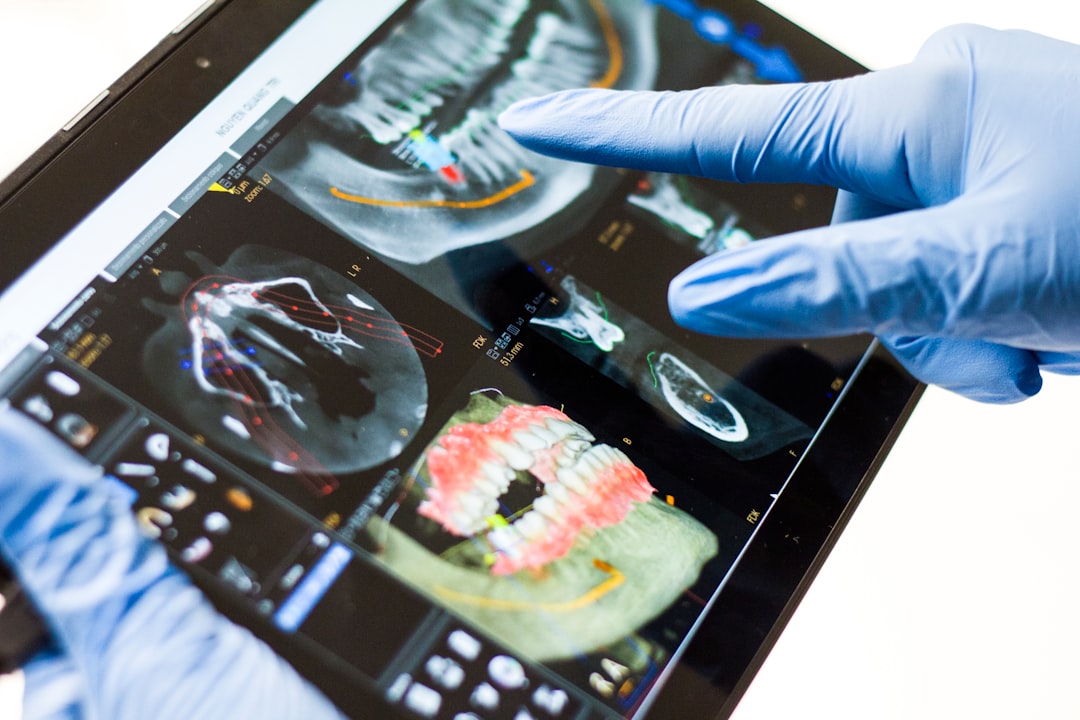
AI changes the conversation by making invisible clinical reasoning more visible. When a system highlights suspected decay, outlines bone levels, measures changes over time, or compares current and previous images, it can turn a technical radiograph into a communication aid. In practical terms, this means AI imaging companies that win in 2026 will not only help dentists detect disease; they will help dentists explain disease clearly and ethically.
What Will Define a Market Leader in 2026?
The leading companies will likely share several characteristics. First, they must have strong clinical credibility, including transparent validation, regulatory clearances where applicable, and careful claims about intended use. Second, their tools must fit into existing dental workflows rather than requiring teams to open separate systems or manually export images. Third, their patient education features must be visually simple enough for a non-clinician to understand without oversimplifying the diagnosis.
In addition, the winners will need to understand the difference between clinical decision support and patient persuasion. The purpose of AI should not be to pressure patients into treatment. The more credible use case is to support informed consent, improve understanding, document findings, and help patients see why a dentist is recommending monitoring, prevention, or treatment.
Pearl: A Strong Candidate for Patient-Facing AI Imaging
Pearl is one of the most prominent companies in dental AI imaging and is often associated with radiologic disease detection and visual AI overlays. Its platform, particularly products connected with chairside image interpretation, has been positioned in a way that naturally supports patient education. The reason is straightforward: if AI can highlight suspected findings in a clear visual form, the same output can help a dentist explain the concern to the patient.
Pearl’s potential strength in 2026 lies in its emphasis on making radiographic findings visible and reviewable. For patient education, this matters because patients do not usually respond to abstract descriptions such as “there may be recurrent decay near the margin.” They respond better when the clinician can point to a highlighted area and explain why it matters, what the options are, and what could happen if the issue is monitored rather than treated.
The company’s biggest opportunity is to become a standard chairside explanation layer across different practice types, from solo practices to large dental service organizations. Its challenge will be maintaining clinician trust. If AI marks too many questionable areas or appears to overstate certainty, the tool could undermine confidence rather than strengthen it. For that reason, Pearl’s leadership will depend on balancing visibility with clinical nuance.
Overjet: Particularly Strong in Periodontal and Insurance-Linked Communication
Overjet is another likely leader, especially because it has built a strong identity around dental AI that supports measurable radiographic interpretation, including bone level analysis and caries detection. Its technology has also been connected with payers and dental insurance workflows, which gives it a distinctive position in the market.
For patient education, Overjet’s advantage is the ability to present findings quantitatively. Bone loss, for example, can be difficult for patients to understand if described only in words. A visual measurement or progression comparison can make periodontal disease more concrete. If the patient can see that bone support has changed over time, the recommendation for periodontal therapy may feel less subjective and more evidence-based.
Overjet may also be influential because patient education increasingly overlaps with documentation. Practices want to show why treatment is recommended, insurers want evidence for claims, and patients want transparency. A platform that creates consistent visual explanations may support all three needs. The risk, however, is that education tools tied too closely to reimbursement logic may be perceived as administrative rather than patient-centered. Overjet’s credibility in 2026 will depend on keeping clinical communication at the core.
VideaHealth: A Serious Competitor for Everyday Practice Adoption
VideaHealth has emerged as a meaningful competitor in AI-assisted dental radiograph analysis. Its potential role in patient education is tied to simplicity and adoption. In everyday dentistry, the best tool is not always the most technically complex; it is the one that hygienists, assistants, and dentists can use consistently during a normal appointment.
If VideaHealth can continue to make radiographic AI easy to use at the point of care, it could become one of the leading chairside education platforms in 2026. Its value will be strongest in routine restorative and hygiene workflows, where patients are often shown bitewings and asked to understand decay risk, bone loss, or changes since the last visit.
Patient education is also a team activity. Hygienists frequently start the conversation, dentists confirm the diagnosis, and treatment coordinators explain options and cost. AI imaging tools that support this entire communication chain will have an advantage. VideaHealth’s opportunity is to become a practical, repeatable part of that process rather than a specialist tool used only by the dentist.
Denti.AI: Strong Potential in Workflow and Orthodontic Imaging
Denti.AI is another company to watch, particularly because of its work across dental imaging automation and clinical workflows. Its capabilities have included radiographic analysis and tools relevant to orthodontics and operational efficiency. Patient education in orthodontics and preventive dentistry has a different character than in urgent restorative care: it often involves progress tracking, compliance, eruption guidance, alignment visualization, and long-term planning.
This gives Denti.AI a credible path to patient education leadership if it can connect imaging insights with clear longitudinal storytelling. Patients and parents often want to know whether treatment is progressing, whether hygiene is adequate, and whether a recommended next step is necessary. AI-supported visuals can help make those conversations more objective.
In 2026, Denti.AI’s competitiveness will likely depend on how broadly its tools integrate with practice management systems, imaging software, and specialty workflows. Companies that remain isolated add friction; companies that fit into daily routines become communication infrastructure.
DEXIS, Carestream Dental, and Planmeca: The Power of Imaging Ecosystems
Standalone AI companies receive much of the attention, but major imaging ecosystem providers should not be underestimated. DEXIS, Carestream Dental, and Planmeca already have deep relationships with dental practices through sensors, panoramic units, CBCT systems, and imaging software. If these companies embed AI-powered patient education directly into native imaging environments, they could become dominant by distribution rather than by AI branding alone.
This matters because many dental teams prefer tools that are already inside the software they use to capture and review images. A dentist may not want another login, another subscription interface, or another training burden. If AI overlays, comparison views, implant planning visuals, airway assessments, or periodontal measurements appear naturally inside established imaging platforms, adoption may be faster.
These companies also have a major opportunity in 3D imaging education. CBCT scans are powerful, but they can be difficult for patients to interpret. AI-assisted segmentation and simplified 3D views could help explain impacted teeth, implant sites, endodontic lesions, sinus proximity, bone volume, and pathology referrals. The challenge is that advanced imaging education must be handled carefully; a dramatic 3D image can inform, but it can also frighten patients if not explained properly.
3Shape and Align Technology: Education Through Visualization Rather Than Radiographs Alone
Patient education is not limited to X-rays. Intraoral scans, orthodontic simulations, occlusal analysis, and smile visualization are increasingly part of the same conversation. 3Shape and Align Technology, through ecosystems connected to digital impressions and orthodontic planning, are well positioned to lead education tools that rely on surface imaging and treatment simulation.
Align’s iTero ecosystem, for example, has helped normalize chairside digital visualization in orthodontic and restorative conversations. 3Shape has a strong role in digital dentistry workflows, including scanning and treatment planning. Their patient education advantage is that patients often understand 3D tooth models more quickly than radiographs. A cracked cusp, crowding, wear, recession, or restorative plan can be easier to discuss using a digital model.
However, these companies occupy a slightly different category than AI radiographic detection firms. Their leadership will likely be strongest where education involves treatment planning, orthodontic progress, restorative design, and visualization of outcomes. They may not replace radiographic AI companies; instead, they may complement them.
Image not found in postmetaDentalMonitoring and Remote Patient Education
DentalMonitoring also deserves mention because patient education increasingly happens outside the dental chair. Remote monitoring, smartphone imaging, and AI-guided progress tracking can help patients understand treatment between visits. This is especially relevant in orthodontics, aligner therapy, retention, and hygiene monitoring.
By 2026, remote education may become a major differentiator. Patients do not only need explanations during appointments; they need reinforcement afterward. A system that helps them see progress, understand oral hygiene issues, or know when to contact the practice can improve engagement. The limitation is that smartphone-based imaging is not the same as diagnostic radiography, so companies in this category must be clear about what their tools can and cannot assess.
Likely Leaders by Category
- Best positioned for radiographic chairside education: Pearl, Overjet, and VideaHealth.
- Best positioned for periodontal and measurement-based explanations: Overjet.
- Best positioned for practical everyday adoption in general dentistry: VideaHealth and Pearl.
- Best positioned through native imaging ecosystems: DEXIS, Carestream Dental, and Planmeca.
- Best positioned for scan-based education and treatment visualization: Align Technology and 3Shape.
- Best positioned for remote orthodontic patient engagement: DentalMonitoring.
What Could Change the Competitive Landscape?
Several factors could shift leadership quickly. Regulatory scrutiny may increase as AI tools become more visible to patients. Integration partnerships may also change the market, especially if major imaging platforms choose preferred AI vendors. Dental service organizations could accelerate adoption by standardizing one AI education platform across hundreds of locations. Conversely, clinician resistance could slow companies whose tools are perceived as intrusive, inaccurate, or too aggressive in promoting treatment.
Another important factor is transparency. Patients may increasingly ask whether an AI system is being used, what it is evaluating, and whether the dentist agrees with it. The companies that provide clear language for consent, limitations, and clinician oversight will be better positioned than those that treat AI as a black box.
Final Outlook
The most likely leaders in AI dental imaging patient education in 2026 are Pearl, Overjet, and VideaHealth, with Denti.AI also positioned as a serious contender in workflow-driven and specialty contexts. At the same time, established imaging and digital dentistry companies such as DEXIS, Carestream Dental, Planmeca, 3Shape, and Align Technology may lead in environments where distribution, hardware integration, and visualization matter more than standalone AI branding.
The winning companies will not be those that simply draw the brightest boxes around radiographic findings. They will be the companies that help clinicians communicate with accuracy, restraint, and empathy. In dentistry, trust is built when patients can see the evidence, understand the recommendation, and feel that the final decision remains guided by a responsible clinician. AI imaging companies that strengthen that trust are the ones most likely to define patient education in 2026.
